
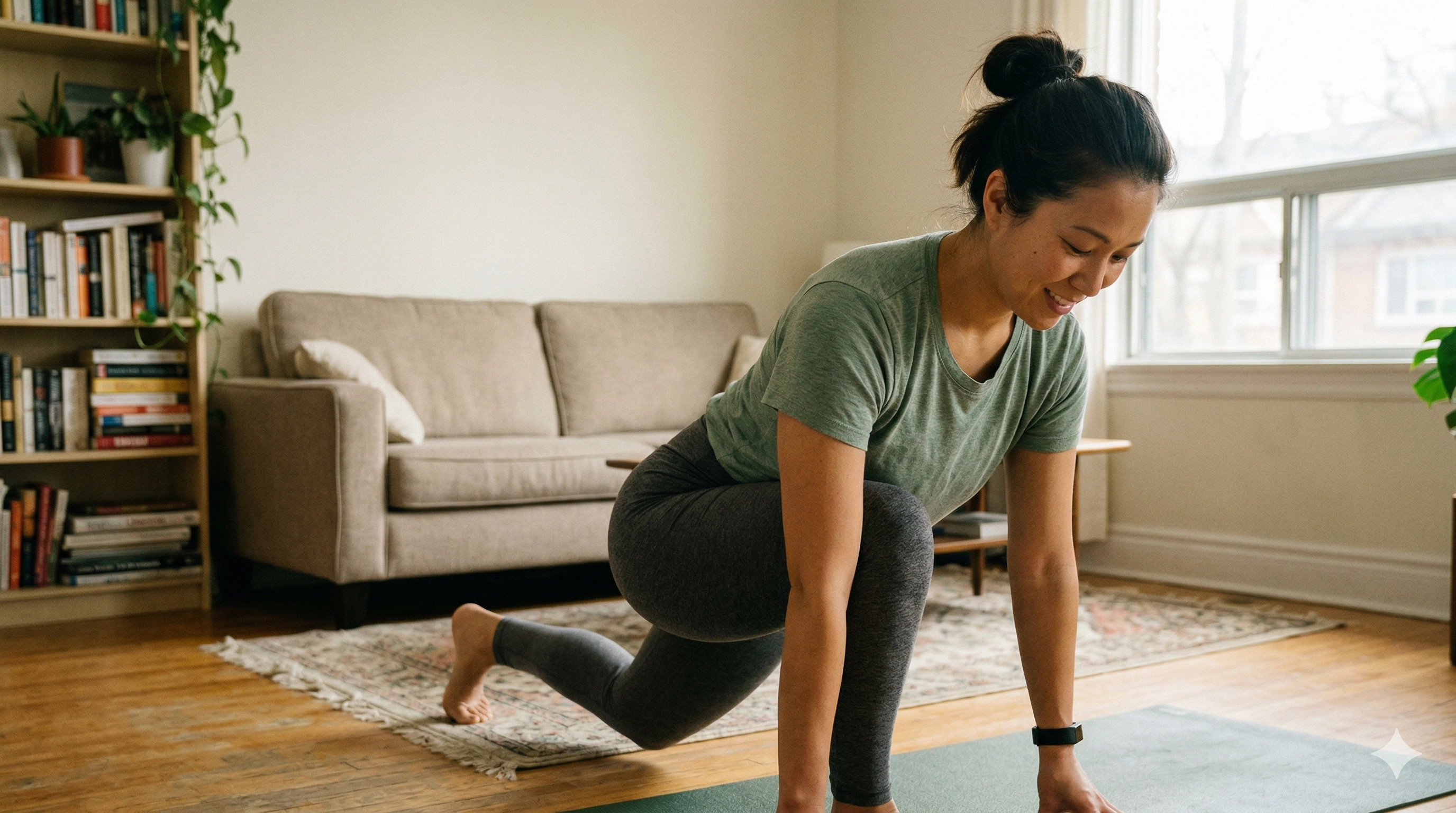
April Is Stress Awareness Month: Why Small Movement Still Matters
April is Stress Awareness Month, and given the current state of the world it’s not hard to see how global events are trickling down and affecting many of us. For some people, the affects of stress can be quite crippling and leads to a burnout state. One way to overcome a highly stressful state is physical activity or movement. Often, movement is usually presented like it needs a full gym session, a perfect morning routine, or more energy than people actually have. That is not easy to achieve when your day is already packed. At Elysautus, we take a simpler view. Some movement is better than none. Ten to fifteen minutes still counts. A short session in your own space still counts. If it helps you loosen up, breathe a bit better, and come down a notch from the stress of the day, that is a solid start.
How Short At-Home Movement Can Help Reduce Stress
There is also good reason to think about movement this way. Short breaks for physical activity can act as a reset rather than another task hanging over your head. One workplace study found that just 15 minutes of chair-based yoga or guided meditation done in an office setting reduced perceived stress compared with a control condition, while also improving some physiological stress markers. That matters because it reinforces a simple point: you do not need a dedicated class, studio, or major schedule overhaul to get something useful out of movement. Your living room counts. Your office counts. The stretch you do between tasks counts. If the goal is to reduce stress and feel a bit more functional, the bar does not need to be set somewhere ridiculous.
Why Yoga Works for Mobility, Recovery, and Stress Relief
This is where yoga becomes useful, especially for people who want something low-pressure. Yoga works well because it can cover a few needs at once. It can help with mobility when your body feels stiff from sitting or commuting. It can support recovery when you feel run down and do not want an intense workout. It can also create a calmer transition in the middle of a stressful day. A systematic review on yoga and stress found growing evidence that yoga-based practices may influence stress-related biosignals, though the authors also note that more rigorous research is still needed. That is worth keeping in mind. Yoga does not need to be oversold to be useful. It is not a miracle fix. It is just one of the more practical ways to pair light movement with breath and a bit of mental downshifting.
Can 15 Minutes of Yoga a Day Make a Difference?
The other useful part is that yoga does not need much time to be worth doing. In a study of dental hygiene students, 15-minute yoga sessions before exams were feasible and were linked to lower blood pressure and lower perceived stress scores within the yoga group, even though the differences versus the control group were not statistically significant overall. That is still meaningful in real life. Most people are not looking for a dramatic transformation from a single session. They are looking for something manageable enough to repeat. Another randomized trial found that regular online Yoga Nidra practice over two months was associated with small but significant improvements in some psychological outcomes, along with healthier cortisol-related patterns in participants who practiced regularly. The effects were not massive, and that is exactly the point. Small, low-friction practices can still be worthwhile.
Dr. Andrew Huberman also reflects on the benefits of Yoga Nidra that you can refer to on Tim Ferriss’ YouTube channel for another prospective on the benefits.
A Simple Way to Start Yoga at Home This Stress Awareness Month

For Stress Awareness Month, the goal is not to suddenly become obsessed with chasing optimal wellness. The goal is to make movement easier at the beginning. Start with something short and simple enough that you will still do it on a tired day. Yoga is definitely one option, not just for performance but also stress reduction. A few minutes of stretching, breathing, and controlled movement in your own space can be a practical way to support mobility, recovery, and stress relief without adding more friction to your life.
If you want a straightforward place to begin, check out our guides and sign up for the newsletter. We are building simple, beginner-friendly resources designed to help healthy habits fit real schedules.